
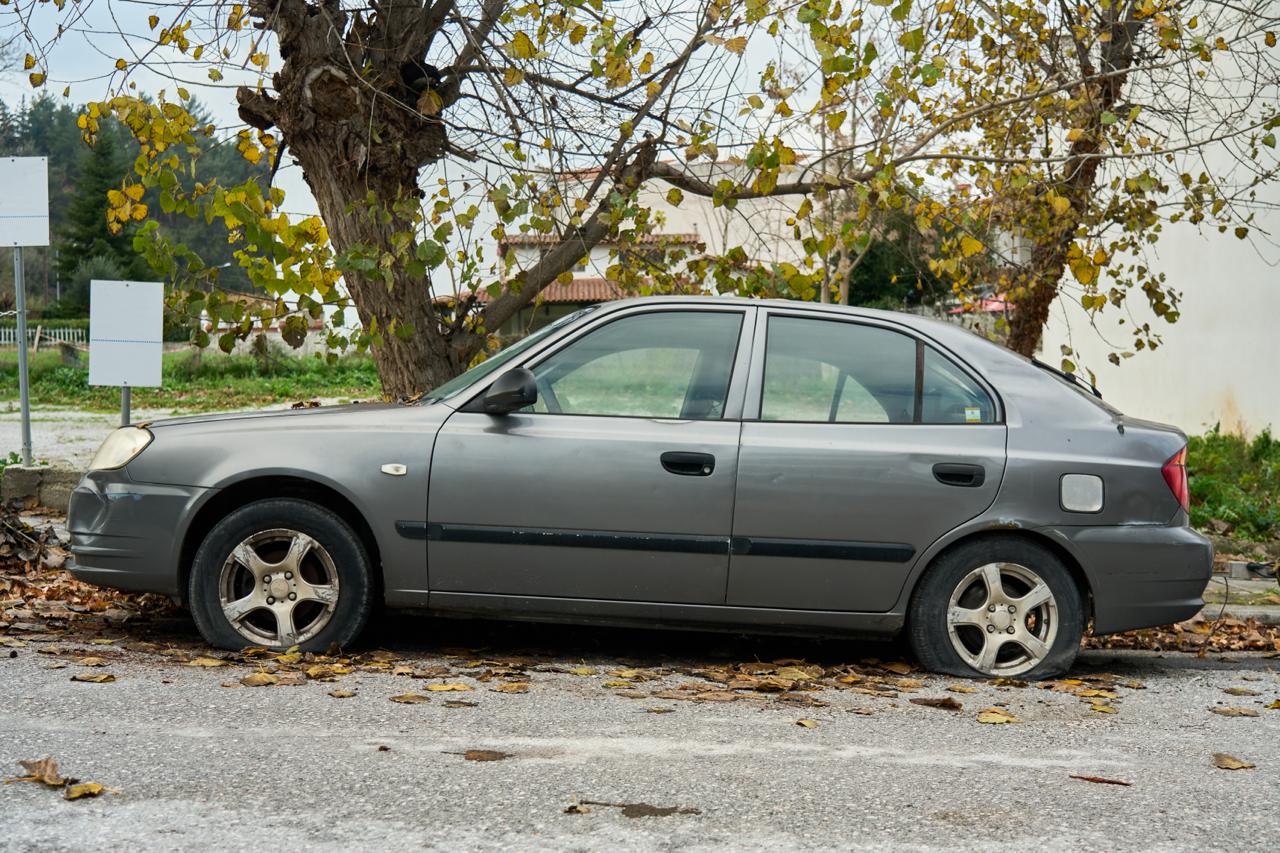
Cars are built to move, so when you leave a vehicle stationary, it begins to die. It sounds harmless, but it causes real damage faster than most people expect: Gravity pulls oil away from engine parts, seals dry out, and corrosion takes place. You might wonder:
How Long is Too Long for a Car to Sit?
The answer is: It depends on the make, model, and year. Here’s a general timeline:
- 2 to 4 weeks: Usually the battery loses its charge.
- 1 to 3 months: Tires start to flatten, most fluids break down, and rust begins to form on brakes and metal parts.
- 3 to 6 months: Fuel degrade and seals dry out
- More than 6 months: Your car slowly falls apart and small problems turn into expensive ones. Damage is often irreversible at this point.
Vehicles are machines that need activity to survive, so the longer it sits, the harder and more costly it becomes to fix.
Below are the most common risks you face when your car sits forgotten in the driveway and why many owners choose junk car removal in Canada instead of letting damage pile up.
Dead Car Battery
Your car battery works constantly, meaning it keeps draining energy even when the engine is off. For example, security systems, computers, memory settings, and the internal clock drain small amounts of power 24/7. This is called parasitic drain.
When you use your car regularly, the alternator recharges the battery, so you don’t face any issue. But when the car sits for days or weeks, the drain continues without the recharge. Within 2 to 4 weeks of inactivity, the voltage drops below the level needed to start the engine. The longer the battery stays empty, the more damage happens inside, and only a jump start won’t be enough to turn the engines on again. Some areas in Canada face extreme cold, which makes this process happen even faster.
Why It Is a Risk
A dead battery stops the car from starting at all and, when leaving it discharged for a long period, it causes permanent chemical damage called sulfation, which makes the battery lose its ability to hold a charge forever. It’s more than just an inconvenience.
Replacing the battery is often just the first cost, which can exceed $150. If the voltage drops too low, you also risk corrupting the vehicle’s computer software, leading to expensive repairs. This situation pushes many Canadian owners toward junk car removal instead of chasing repeated and costly fixes.
Flat Tires
Tires are built to roll, not sit. They carry the weight of the entire vehicle, but when a car moves, this weight shifts constantly. When parked, the weight presses on the same spot every day, resulting in flat tires. Even if the tire looks fine, the shape changes inside and the rubber dries out, weakening the structure.
Why It Is a Risk
The weight pressure causes permanent deformities in the tire shape. When driving, you’ll notice vibration, poor grip, and unsafe handling. Furthermore, dry, brittle tires are a safety hazard that leads to increased blowout risk, especially at highway speeds.
Replacing one tire often means replacing all four to keep balance. In such cases, junk car removal in Canada might be more cost-effective than buying a fresh set of four.
Fluids Deterioration
Engine fluids are like the blood of your vehicle. Engine oil, coolant, brake fluid, and transmission fluid are designed to flow, so when they sit still, they degrade. Over time, moisture builds up, additives separate, oil separates and turns into a thick sludge. Now the fluids that once protected parts cause wear the moment the engine runs again.
Why It Is a Risk
Starting an engine with dry upper cylinders causes immediate metal-on-metal friction, leading to engine damage, overheating, and brake problems. If the car has been parked for months, the damage may already be done.
Fixing a seized engine costs thousands. This is when auto-scrap removal in Canada becomes a practical solution instead of risking major mechanical failure.
Brakes Failure
Brake rotors are made of bare steel and rust quickly when not used, because moisture in the air builds inside brake lines. This system relies on regular use to scrape off rust from surface, rotors, and inside the brake drums. After sitting for months, the calliper pins that allow the brakes to squeeze and release can seize up due to lack of lubrication.
Why It Is a Risk
Brake failure puts you and everybody else on the road at risk. If the rust is severe, it causes uneven braking, violent pulsation, and the pads might fuse to the rotors, preventing the wheel from turning at all.
Repairs often include rotors, pads, and callipers all at once, making it labour-intensive and costly. For a car that’s no longer in use, this cost alone makes selling the scrap car for cash a better option.
Fuel Tank Corrosion
Gasoline deteriorates after a few months, a process that separates water from the gas. In addition, most fuel contains ethanol, which attracts moisture from the air. This moisture settles in the fuel tank and lines, causing internal rust inside metal tanks and injectors. Even in plastic tanks, the fuel oxidizes and turns into an improper substance.
Why It Is a Risk
Bad fuel systems cause misfires by clogging and corroding your engine’s feeding system. The risks include environmental damage, operational failure, and safety hazards.
Cleaning a fuel system often requires dropping the tank, flushing the lines, or even replacing it. If the injectors are ruined, the repair bill spikes. These are expensive fixes for a car that already sat too long and often signal it’s time to scrap car for cash.
Body Rust & Corrosion
Protective clear coats and waxes degrade over time, especially when a car doesn’t move and is parked over grass or dirt, trapping moisture in seams, wheel wells, and under panels. Leaves and debris accumulated in the surface also trap water against the paint. Salt from winter roads accelerates this process aggressively.
Without the airflow from driving to dry these areas out, rust spreads quietly, creating paint bubbles and weakening metal from the inside out.
Why It Is a Risk
Rust is not just a cosmetic issue; it’s permanent and spreads fast. It’s like cancer for cars, compromising its integrity, lowering safety, weakening frames, and dropping resale value.
Once rust reaches structural parts, the car becomes unsafe to drive and repairs stop making sense. At this stage, the vehicle has zero resale value to private buyers and junk car removal in Canada becomes the safest and most realistic option.
Environmental Damage
Cars left outside face constant exposure to sunlight, rain, snow, animal nests, bird droppings, and dirt that ruins paint, dries seals, breaks down plastic, and traps moisture. It becomes part of the landscape, and nature will try to reclaim it. Also, there’s a high chance of leaking fluids (oil, coolant, brake fluid) seep into soil and groundwater.
Why It Is a Risk
Environmental damage creates a biohazard and hidden safety issues. For example, rodent damage to wiring harnesses creates short circuits that can ignite a fire when you try to start the car. Leaking fluids contaminate the soil and groundwater, leading to environmental fines in many jurisdictions.
Fixing these issues costs more than most expect. That’s why a leaking, mouldy car is a liability that often requires professional junk car removal in Canada.
Junk Car Removal in Canada
If you read through this list and checked off some or all the items, your vehicle is already in trouble. Trying to revive a car with a seized engine, rusted brakes, and corrosion often costs more than the vehicle is worth. Waiting only adds more risks. The smartest financial move is to sell your scrap car for cash in Canada before you need to handle more issues.
Kenny U-Pull makes junk car removal simple across Quebec, Ontario, New Brunswick, and Nova Scotia. We buy cars in any condition, so you don’t need to fix anything. We don’t care if the battery is dead or the tires are flat, if they stopped running months ago or just became unsafe.
If your car has reached this stage, fill out the form for a free quote and turn that parked problem into instant cash.